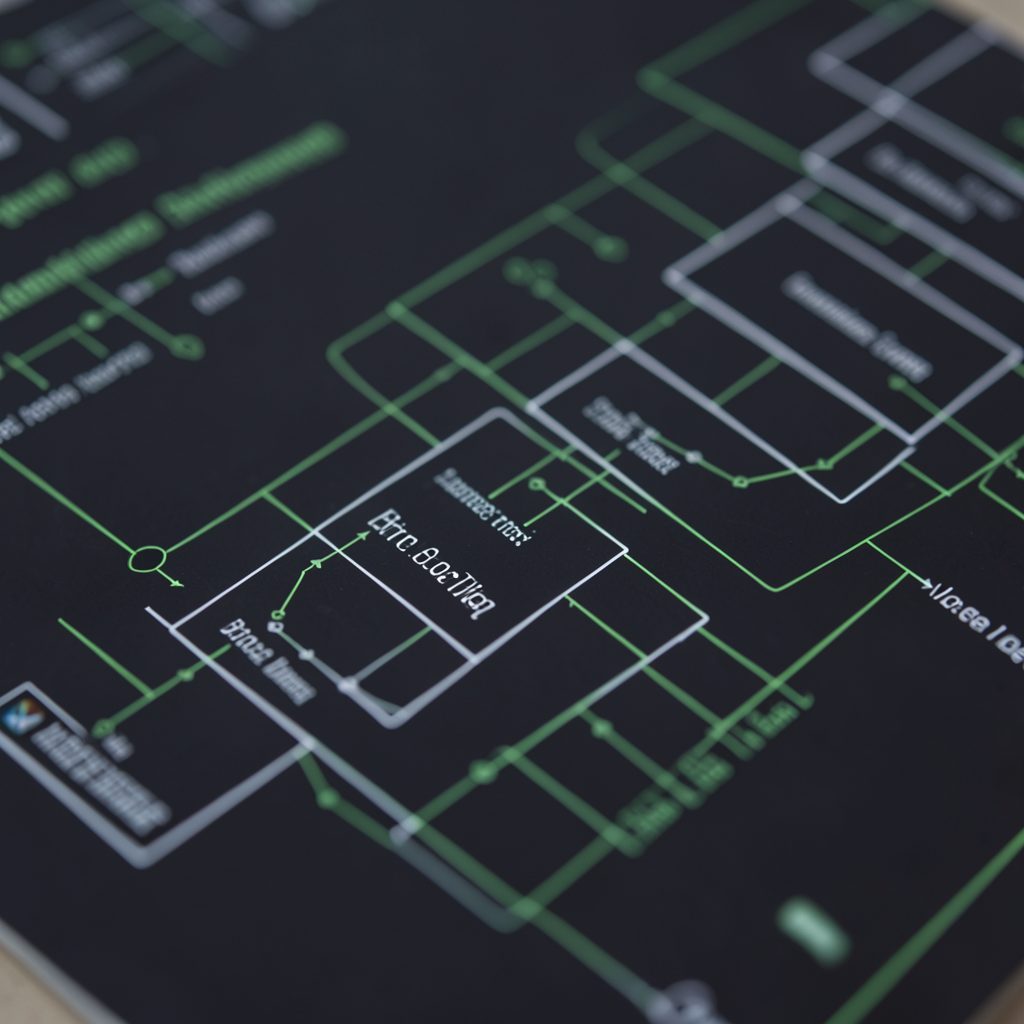


ANSI And ITU SS7 Network Topology Differences
Signaling System No. 7 networks use structured relationships between signaling points, signal transfer points, and service control points. Although ANSI and ITU-T standards share the same fundamental purpose, their network layouts reflect different numbering schemes, regional operating practices, and traffic-management models.
The distinction matters when engineers connect national and international signaling domains, migrate from TDM links to SIGTRAN, or troubleshoot routing across carrier boundaries. A topology that works cleanly in an ANSI environment may require translation or a different hierarchy in an ITU network.
Both variants support reliable call control, number translation, mobility services, and database access. Their common MTP, SCCP, ISUP, and TCAP concepts make interoperability possible, but the way signaling points are identified and interconnected remains distinctly different.
Shared SS7 Building Blocks
ANSI and ITU networks contain signaling points such as service switching points, service control points, and signal transfer points. SSPs originate and receive call signaling, SCPs provide database-based services, and STPs relay messages according to destination point codes and subsystem information.
The two standards also use signaling links and link sets to create redundancy. Paired STPs, alternate routes, load sharing, and link failure procedures are central to both designs. MTP Level 2 manages individual link reliability, while MTP Level 3 handles routing, traffic management, and network recovery.
This shared foundation makes it possible to describe both systems using similar concepts. The important differences appear in hierarchy, point-code structure, link naming conventions, and the boundary between national and international signaling networks.
ANSI Hierarchy And Point Codes
ANSI SS7 is widely associated with North American telecommunications networks. Its architecture commonly organizes STPs into mated pairs and clusters. Access links connect an originating signaling point to an STP pair, while intercluster links provide paths between different STP groups.
ANSI point codes use a 24-bit structure commonly represented as network, cluster, and member values. This format gives network operators considerable space for identifying signaling points within a large national network. Routing decisions can therefore reflect a detailed regional and organizational hierarchy.
ANSI deployments often emphasize direct control of national signaling traffic. STP clusters can isolate traffic domains, support regional resilience, and simplify network administration. Gateway STPs provide controlled access to other carriers, international networks, and protocol conversion platforms.
ITU-T Structure And International Boundaries
ITU-T SS7 uses a 14-bit point-code system, traditionally displayed as zone, area or network, and signaling-point identifiers. The smaller address space is suitable for the international signaling network, where coordination between administrations and operators is essential.
An ITU topology commonly separates national and international levels. A national signaling point may reach an international gateway through an STP, while the international network routes traffic toward a destination country or global service platform. This separation helps operators maintain national autonomy while preserving international connectivity.
ITU terminology also gives particular importance to signaling relations between STPs at different hierarchical levels. B and D links can have meanings that differ from common ANSI usage, so engineers should verify the standard and operator profile before interpreting a link diagram.
| Feature | ANSI SS7 | ITU-T SS7 |
|---|---|---|
| Typical geographic use | North American national networks | International and national networks worldwide |
| Point-code size | 24 bits | 14 bits |
| Common point-code view | Network, cluster, member | Zone, area or network, signaling point |
| Common topology | Mated STP pairs and clusters | National and international signaling levels |
| Link interpretation | Often cluster-oriented | Frequently associated with hierarchical STP relationships |
| Interworking concern | Point-code translation and variant behavior | National/international gateway coordination |
Link Types And Routing Behavior
Both ANSI and ITU environments may use A, B, C, D, E, and F links, but the practical meaning of these labels depends on the standard and network design. An A link normally connects an SSP or SCP to an STP. C links commonly connect members of an STP pair for coordination and recovery.
B, D, and E links support alternate paths or relationships between STPs. In an ANSI diagram, B links are often associated with connections between STP clusters, while D links may represent links within a broader cluster hierarchy. ITU diagrams may apply B and D labels according to different hierarchical relationships.
F links represent direct signaling connections between end points and are often limited in large carrier networks because they can reduce the central control offered by STPs. Engineers should focus on actual routing behavior, link-set configuration, and point-code reachability rather than relying on a label alone.
Interworking Across Network Variants
ANSI and ITU networks can exchange signaling through gateway STPs, international signaling transfer points, or protocol mediation systems. Point-code translation is frequently required because the address formats and routing domains are different. The gateway must also understand whether traffic belongs to MTP3, SCCP, ISUP, or another signaling application.
Interworking becomes more complex when operators use different national variants of ISUP or SCCP. A call setup may require message screening, parameter mapping, global-title translation, or conversion between national and international routing indicators. Incorrect handling can cause failed calls, rejected database queries, or messages sent toward an unreachable signaling point.
SIGTRAN transports SS7 user parts over IP through protocols such as M2PA, M2UA, and SUA. It changes the physical transport and improves deployment flexibility, but it does not automatically remove ANSI-versus-ITU topology differences. The logical point codes, routing contexts, and gateway relationships still need careful design.
Operational And Security Considerations
Topology planning should account for link congestion, STP overload, route-set status, and the effect of isolated signaling points. ANSI cluster designs can make fault domains clear, while ITU national and international layers can simplify administrative boundaries. In either model, diverse physical paths are essential because signaling outages can affect many services at once.
Security controls should be applied at every interconnection. Screening, restricted point-code access, SCCP global-title controls, rate limits, and anomaly monitoring help prevent unauthorized signaling and signaling storms. SIGTRAN networks also require IP-layer protections, including secure management, firewall policy, and appropriate transport protection.
For specialized topology reviews, protocol training, or questions about signaling architecture, use the SS7 training contact page to reach the resource team.
Practical Design Priorities
A reliable comparison should lead to concrete engineering decisions rather than a simple standards label. Document the signaling domain, identify every gateway, and show how point codes are translated between national and international sections.
When reviewing an existing network, prioritize these actions:
- Map STP pairs, clusters, gateways, and alternate routes in separate logical domains.
- Confirm whether each point code follows ANSI or ITU-T formatting and routing rules.
- Validate A, B, C, D, E, and F link meanings against the deployed operator specification.
- Test SCCP global-title translation and ISUP parameter handling across gateways.
- Monitor SIGTRAN association status, routing contexts, congestion, and abnormal signaling rates.
A clear topology diagram should show both the physical transport and the logical SS7 hierarchy. With those layers documented, engineers can identify interoperability gaps, plan resilient IP migration, and secure the signaling paths that support critical voice and mobile services. Begin by auditing point-code reachability and gateway behavior across every ANSI and ITU boundary.