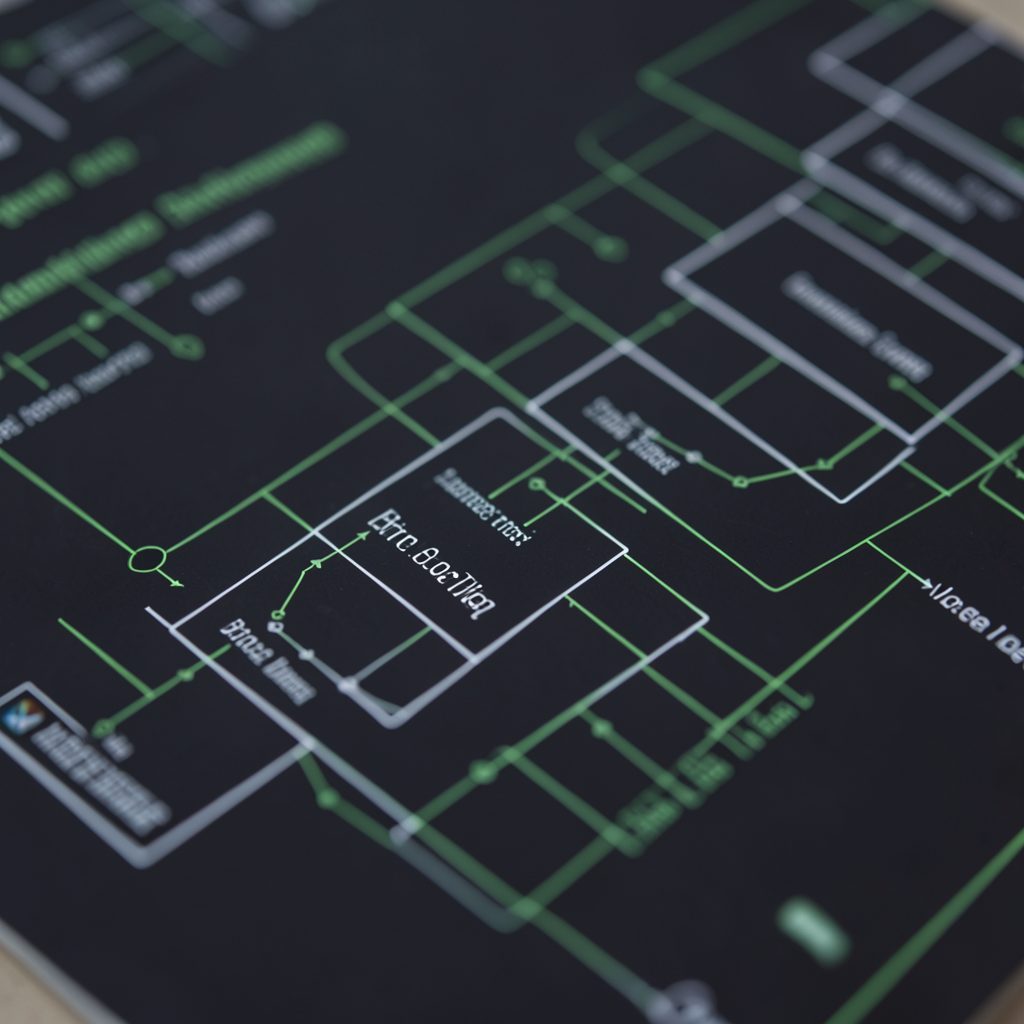


SIGTRAN M2PA Link State Management And Failover Events
M2PA transports SS7 MTP3 signaling across an IP network by using SCTP associations between signaling peers. It preserves important MTP2 functions, including link alignment, status exchange, congestion reporting, and orderly recovery, while replacing the traditional physical signaling link with an IP-based connection.
Reliable operation depends on understanding what happens when an M2PA link changes state. A failed interface, lost SCTP association, processor outage, or remote congestion condition can affect route availability within seconds. Correct interpretation of status messages and timers allows engineers to distinguish a temporary transport problem from a genuine signaling failure.
The Role Of M2PA In SIGTRAN
M2PA operates between MTP3 and SCTP. MTP3 continues to manage signaling routes, link selection, traffic distribution, and transfer control, while M2PA provides the signaling-link behavior required for communication with a remote SS7 node. SCTP supplies association management, retransmission, multihoming, and stream handling below the M2PA layer.
Unlike M2UA, M2PA presents a signaling link directly between two signaling endpoints. Each side participates in link alignment and exchanges Link Status messages. This peer-to-peer behavior makes state visibility especially important during maintenance and failover because both endpoints must agree that the link is usable before MTP3 sends signaling traffic.
M2PA Link States And Status Exchange
A link begins outside service and enters alignment when the endpoints attempt to establish communication. The alignment phase confirms that both sides recognize the link relationship and can exchange valid M2PA messages. Proving then checks the stability of the path before the link reaches the ready state.
The ready state means that signaling traffic can be transferred under normal conditions. Other states indicate conditions such as local or remote processor outage, busy status, insufficient receive capacity, or a failure during alignment. Exact state names and transitions depend on the implementation, but the operational principle remains consistent: MTP3 should use the link only when M2PA reports a stable and serviceable condition.
Link Status messages carry state information to the peer. They are separate from ordinary user signaling traffic and provide the control information needed to detect an interrupted association, coordinate recovery, and prevent traffic from being sent across a link that has not completed proving.
How Failover Events Develop
A common failure begins with an SCTP path outage or complete association loss. M2PA then reports the link unavailable, and MTP3 removes it from active link selection. If an alternate link in the same link set is available, MTP3 can redirect traffic according to its link-selection and changeover procedures. The speed of this reaction depends on SCTP detection, M2PA timers, and MTP3 configuration.
A processor outage differs from a transport failure. The SCTP association may remain established while the remote signaling process cannot accept or generate traffic. In this case, the peer may report processor outage rather than disappearing from the network. Treating every processor outage as a dead IP path can create unnecessary association resets and unstable route behavior.
Recovery also has several stages. After transport connectivity returns, the link normally realigns and proves again before becoming ready. Engineers should expect a short period in which the SCTP association is established but signaling traffic remains blocked. This protects the network from prematurely sending messages through a link whose synchronization or remote processing state is not yet confirmed.
| Event | M2PA or SCTP indication | MTP3 response | Operational focus |
|---|---|---|---|
| SCTP association loss | Link unavailable or association failure | Remove link from service and change over traffic | Check path reachability and SCTP timers |
| Remote processor outage | Processor outage status | Restrict or stop traffic on the affected link | Check signaling application health |
| Congestion or busy condition | Busy or congestion-related status | Reduce use according to implementation policy | Review buffers, CPU, and traffic bursts |
| Link recovery | Alignment, proving, then ready | Restore link to the active link set | Verify stable status before load sharing |
| Repeated flapping | Frequent state transitions | Repeated changeover and changeback | Investigate packet loss, timers, and configuration |
Timers, Alignment, And Changeback
M2PA timers control how long an endpoint waits for alignment responses, proving progress, and other state transitions. Excessively short values can cause false failures when the IP network experiences normal delay or brief packet loss. Excessively long values delay failover and may leave traffic dependent on a link that is already unusable.
Changeover moves traffic away from a failed link, while changeback returns traffic after service restoration. Automatic changeback can be useful in a stable network, but immediate restoration may cause repeated traffic shifts if the recovered link is unstable. Many operators use delayed or controlled changeback so the link can remain in the ready state long enough to demonstrate reliability.
SCTP multihoming can improve resilience by providing alternate IP paths within one association, but it does not replace SS7 link redundancy. A local host failure, software fault, firewall rule, or remote application outage can still affect the association. Separate M2PA links, redundant signaling points, and diverse network paths provide stronger protection against correlated failures.
Diagnosing A Failover In Practice
Packet captures should be reviewed across all layers. Start with SCTP association and heartbeat behavior, then inspect M2PA Link Status messages, followed by MTP3 changeover, transfer-prohibited, or route-management events. Comparing timestamps across these layers helps identify whether the initial fault occurred in the IP transport, M2PA state machine, or routing layer.
Useful monitoring includes association state, retransmissions, SCTP path changes, M2PA state duration, alignment failures, processor outage counts, and repeated changebacks. A link that reaches ready but immediately returns to alignment often indicates packet loss, inconsistent endpoint configuration, incorrect point-code settings, or a timer mismatch rather than a simple cable-equivalent failure.
Security monitoring belongs in the same operational process. Signaling links may be technically available while exposed to malformed messages or unauthorized peers, so teams should review relevant SS7 security cases alongside availability events. Filtering, peer authentication, protected management access, and anomaly detection reduce the chance that a signaling attack is mistaken for ordinary failover.
Building A Reliable Failover Procedure
A useful procedure combines event correlation, controlled testing, and clear restoration rules. Engineers should know which system declares the failure, which link becomes active, how MTP3 distributes traffic, and when the recovered link is allowed to rejoin service.
Recommended operational practices include:
- Map each M2PA link to its SCTP association, IP paths, signaling point codes, and MTP3 link set.
- Record normal alignment, proving, ready, outage, and changeback timing before modifying timers.
- Test single-link loss, SCTP path loss, processor outage, remote restart, and complete host failure separately.
- Capture M2PA and MTP3 events during every failover test and compare them with application alarms.
- Use delayed changeback and alert thresholds for repeated state flapping.
A runbook should also identify ownership for transport, SIGTRAN, SS7 routing, and security faults. This avoids prolonged outages caused by teams waiting for one another while a link repeatedly transitions between alignment and unavailable states.
Apply these principles to lab simulations and production monitoring so that every M2PA state transition has an expected operational response. Consistent testing, accurate timer design, and layered event correlation turn failover from a disruptive surprise into a controlled part of SS7 network management.