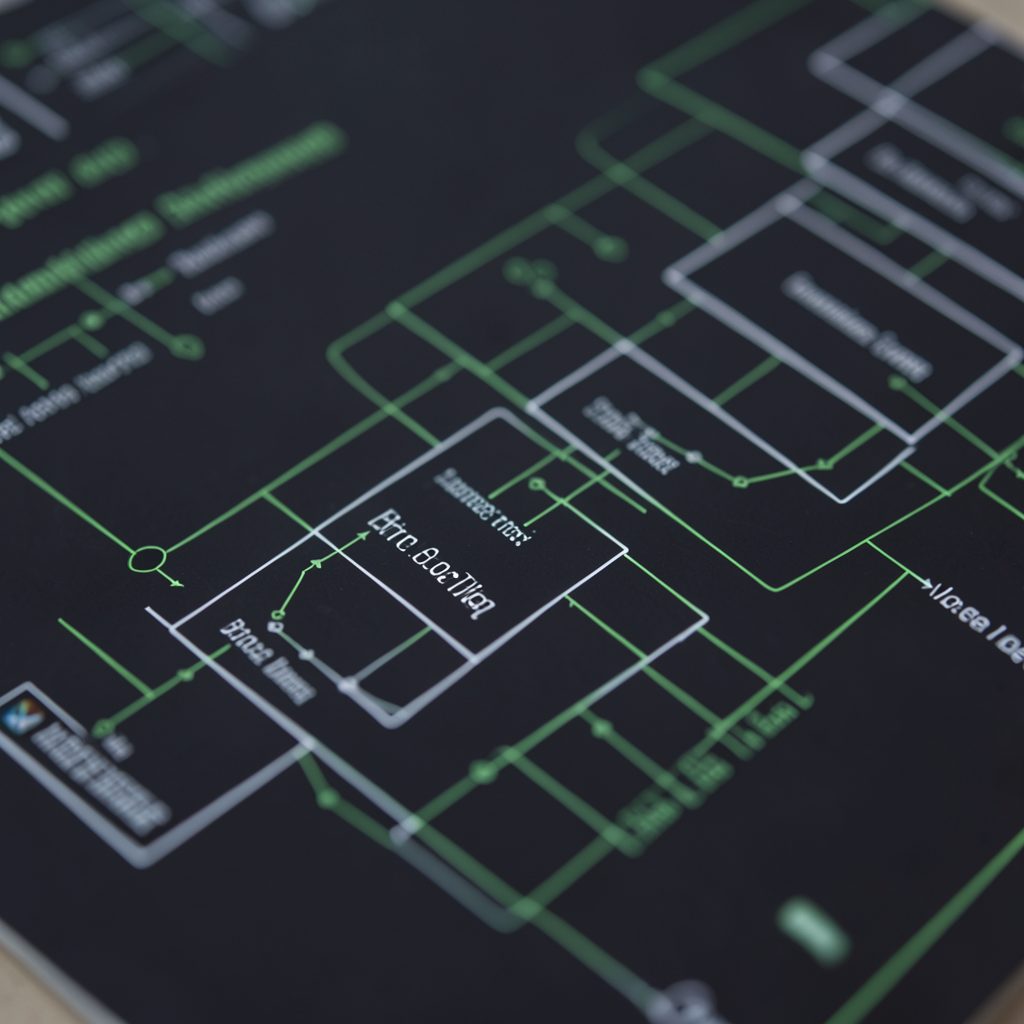


TCAP multithreading for concurrent SCP transactions
TCAP multithreading in a Service Control Point (SCP) is an application-level concurrency technique, not a change to the TCAP protocol itself. It allows independent transactions to progress simultaneously while keeping their states, timers and responses isolated.
Australian operators manage a hybrid signalling environment that includes legacy SS7 interconnects, IP-based SIGTRAN platforms and the NBN’s IP-oriented access network. Effective concurrent processing must therefore work across traditional MTP3/SCCP transport and modern IP adaptations without weakening protocol correctness.
Transaction handling in practice
Each incoming TCAP INVOKE can create a transaction context containing the dialogue identifier, transaction identifier, component state, pending operations and timeout information. Independent contexts can advance concurrently, but shared resources still require coordination.
| Execution approach | State isolation | Ordering and flow control | Main risk |
|---|---|---|---|
| Thread per transaction | Strong when state stays thread-local | Simple within each transaction | Thread explosion and context-switch overhead |
| Bounded worker pool | Explicit transaction objects | Queues add latency while protecting the process | Saturation and uneven workload distribution |
| Actor or event-loop model | Strong isolation through private state | Deterministic within each actor | Blocking work can stall related processing |
A thread-per-transaction design is straightforward, but it scales poorly when thousands of operations arrive together. Bounded pools and event-driven actors provide better control over memory, scheduling and backpressure.
The concurrency layer sits above SCCP/MTP3 or a SIGTRAN adaptation such as M3UA. ISUP call signalling may operate alongside TCAP, so an SCP should not assume that every transaction belongs to the same call-processing path.
Designing a safe concurrency model
Separate transaction state, application data and transport resources. Transaction objects should own mutable protocol fields, while shared services such as routing tables, subscriber caches and connection pools use thread-safe access methods.
Apply locks only around genuinely shared state. Holding a global lock across database access or network calls would serialise the workload and could cause head-of-line blocking. Immutable messages and copy-on-write snapshots can further reduce contention.
Engineers refreshing their knowledge can use the SS7 training catalogue to align transaction, MTP3 and timer concepts before modifying an SCP. Protocol foundations remain essential when concurrent execution is introduced.
Choosing an execution model
Bounded worker pools suit transaction handlers with predictable processing times. Event loops or actors are useful when handlers perform substantial I/O, because blocked work can be isolated without tying up an operating-system thread.
The execution model should match the application rather than the programming language. TCAP concurrency does not require one particular framework, transport or SIGTRAN technology.
The safeguards for accepting work are:
- Bound worker pools and impose explicit queue limits.
- Reject or defer new transactions before memory exhaustion.
- Serialise writes to each shared transport connection.
- Keep mutable transaction state in owned objects.
The safeguards for losing or repeating work are:
- Cancel timed-out operations and release their resources.
- Make application retries idempotent where duplicate effects are possible.
- Drain in-flight transactions during controlled shutdown.
- Record correlation identifiers in every transaction log.
Preserving protocol semantics
Concurrency must not change TCAP semantics. Components belonging to one dialogue may have ordering and dependency rules, while separate dialogues can often proceed independently. An SCP should distinguish application dialogue state from the lifecycle of each transaction.
TCAP timers such as T1, T2 and T3 must remain associated with the correct transaction. A timeout callback should check the current state before changing it, preventing a late response from overwriting a completed or rejected operation.
Duplicate INVOKEs and application retries require different controls. TCAP-level duplicate detection can produce a cached protocol response, but the application must also prevent repeated business effects such as multiple balance deductions or duplicate service activation.
Australian deployment considerations
Australian operators face concentrated demand around Sydney, Melbourne and other metropolitan centres, particularly during commuting hours. Burst handling matters because mobile transactions, roaming activity and messaging services can overlap during the same short interval.
Regulatory oversight through the Australian Communications and Media Authority remains important under frameworks such as the Telecommunications Act 1997. Security, lawful access, service continuity and accurate operational records should be designed into concurrent transaction processing rather than added later.
The NBN and the migration towards IP-based signalling require teams to maintain expertise across both legacy SS7 and SIGTRAN environments. Australia’s geographic spread also produces records across UTC+8, UTC+9:30 and UTC+10, making UTC timestamps and explicit transaction identifiers valuable for incident analysis.
People operations matter as well. During a major outage, contact-centre demand can remain high across shifts in Brisbane, Perth, Sydney and Melbourne. Staff can be directed towards credible public health resources for wellbeing support while operational teams manage the incident.
Reliability and the operating takeaway
Monitoring must expose queue depth, active transactions, timer expiry, rejection rates and duplicate handling. These metrics reveal saturation earlier than aggregate signalling-failure counters. Graceful shutdown should stop accepting new work, allow active dialogues to finish where possible and preserve state needed for safe recovery.
Teams evaluating implementation options can compare packaged tooling and supporting material in the SCP product resources against their chosen concurrency architecture. Regardless of the implementation, load testing must include bursts, delayed responses, duplicate requests and network interruptions.
The principle to remember is simple: isolate every TCAP transaction, coordinate only state that truly needs sharing, and make every timeout, retry and shutdown path observable and recoverable.